Seeking vs believing: the empty cup
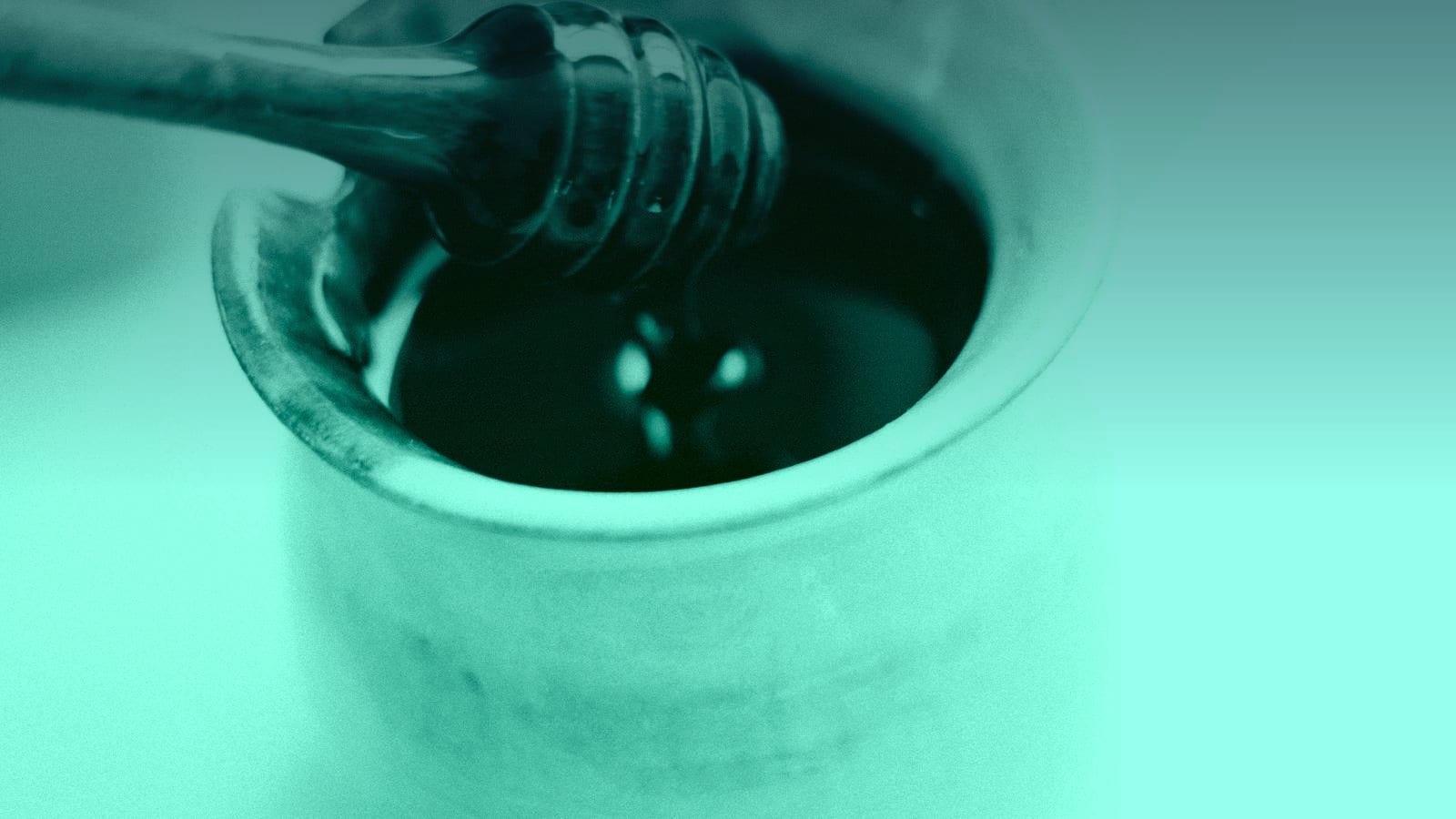
For most of my twenties I was a man with a full cup, and I mistook it for being wise.
I had an opinion on everything. The small town I grew up in was too close-minded. The people in Chennai were too stubborn. Kolkata was too laid-back about work. I could diagnose anyone in about ninety seconds, and I rarely caught myself doing the one thing that actually mattered: looking at my own thinking. My cup was so full of preconceived notions that nothing new could get in. And the worst part is, a full cup feels like strength. It feels like conviction. It took me years to understand it was the opposite.
Believing fills the cup. Seeking empties it.
Here is the picture I keep coming back to. Think of your mind as a container — a cup, a pot, whatever. Believing is filling that cup with water. Preconceived notions, inherited certainties, the answers you decided on a long time ago and stopped questioning. Once the cup is full, that’s it. There is no room for anything else. You can pour and pour but it just spills over the sides.
Seeking is starting with an empty cup and filling it slowly, honestly, along the way.
To seek is to admit something uncomfortable: that there is something greater than what I already know. That I am, in a real sense, ignorant about the essential nature of my own existence — where I came from, what this is, who “I” even am. Believing skips past all that and hands you a comfortable answer. Seeking makes you sit with the not-knowing.
When you are in a state of “I do not know,” you are not in a position to fight anyone or anything.
That line changed something in me. Notice what it does. The man with the full cup is always defending it. Every conversation is a small war, because every new idea is a threat to what he already holds. But the seeker has nothing to protect. “I don’t know” isn’t weakness — it’s the thing that finally lets the fighting stop. It is humble, and it is open, and that openness is the actual foundation of any spiritual process worth the name.
The most dangerous quadrant
Somewhere along the way I learned to map knowledge into four quadrants. The things I know I know. The things I know I don’t know. The things I don’t know I know. And the most dangerous one of all — the things I don’t know I don’t know.
For years I lived almost entirely inside that last quadrant without realising it. I didn’t know that I lacked any real understanding of how my mind, body, and spirit were connected. I wasn’t even aware there was a gap. When I finally saw it, it was genuinely humbling — the kind of moment that makes you feel small and a little ridiculous, in a good way. How little I actually knew. How much I had been performing certainty to cover for it.
A full cup is just a clever way of keeping yourself trapped in that fourth quadrant. If you already believe you have the answer, you will never go looking for the question. Beliefs feel like shelter, but they are also a ceiling. They quietly cap how much you can grow.
The arc from effort to effortless
Here’s where my engineer brain steps in, because I don’t think the spiritual and the practical live in separate rooms. Moving from believing to seeking looks like a downgrade. You’re trading certainty for “I don’t know.” On paper that sounds like a loss. But I’ve come to see it the way I see every change that actually sticks: as an arc from effort to effortless. There’s a shape to that arc, and I’ve watched the cup travel through every stage of it.
Discomfort comes first. Saying “I don’t know” out loud, after years of having an answer for everything, is genuinely hard. It is the step into the new thing that your whole nervous system would rather avoid. Of course it’s uncomfortable — growth always lives just outside the comfort zone, and discomfort is the price of the ticket.
Focus comes next. A full cup spreads you thin; you’re defending opinions on everything, everywhere, all at once. Emptying it lets you aim your limited energy at the few questions that actually matter — who am I, how do mind and body and spirit connect, what’s true here in front of me — instead of scoring points across forty arguments you didn’t need to be in.
Resilience is the messy valley, and this is the part nobody warns you about. There’s a long stretch where seeking still costs you effort and the reward hasn’t arrived yet. You feel less certain, not more. You don’t have a tidy belief to hand people anymore, and the lighter, freer version of yourself hasn’t fully shown up. Most people quit here and run back to the full cup, because certainty is a warm room. Staying in the valley — choosing “I don’t know” again and again before it pays off — is the whole game.
Mastery is where it finally turns effortless. One day you notice you’re no longer spending enormous energy defending positions, scoring points, and pretending. The exhausting effort of being right all the time has just fallen away. The empty cup stops being a discipline you impose and becomes who you are — open by default, curious by reflex. What you get back is room. Room to learn, to be wrong cheaply, to actually hear another person.
That’s the point of the whole arc, and it’s the point of discipline itself: you push only until the behaviour becomes the easy default, and then the discipline has made itself unnecessary. The catch — and I’ve learned this the hard way — is that what’s effortless to do is just as effortless to neglect. So seeking, even at the mastery end, is a posture you keep choosing. Lighter than the full cup, yes. But never automatic enough to stop showing up for.
How to actually empty the cup
I won’t pretend I’ve arrived. I’m still travelling, still emptying the cup, still catching myself mid-judgement. But a few things genuinely moved the needle for me, and none of them are mystical:
- Turn inward, on purpose. Inward is a dimensionless space — you won’t find it on a map or a compass. It only opens up for someone who is willing to be straight and truthful with themselves first. Ten honest minutes of sitting with your own breath does more than ten books of borrowed answers.
- Catch the reflex to defend. The next time you feel that hot little urge to win an argument, pause and ask: am I protecting a belief, or am I actually curious about what’s true? Most of the time you’re just guarding the cup.
- Name what you don’t know — out loud. Saying “I don’t know, tell me more” is one of the most powerful sentences in any language. It disarms the room and it disarms you.
- Hold your certainties loosely. Treat your strongest opinions as the most likely to be hiding something in that fourth quadrant. The ones you’d never question are exactly the ones to question.
I keep a small set of reflection prompts and trackers for this kind of inner work over in the resources, because honestly, a posture this slippery needs structure to hold. And if you want the longer arc of how this fits across all eight spheres of a life in flux — work, money, relationships, the lot — it’s all in the book. You can read a bit more about where I’m coming from here.
Change is the only constant, and it does not wait for you to have the right beliefs. It arrives whether your cup is full or empty. The difference is only this: a full cup spills it all over the floor, and an empty one is finally able to receive.