Believe in your potential! Challenge negative beliefs in 4 steps
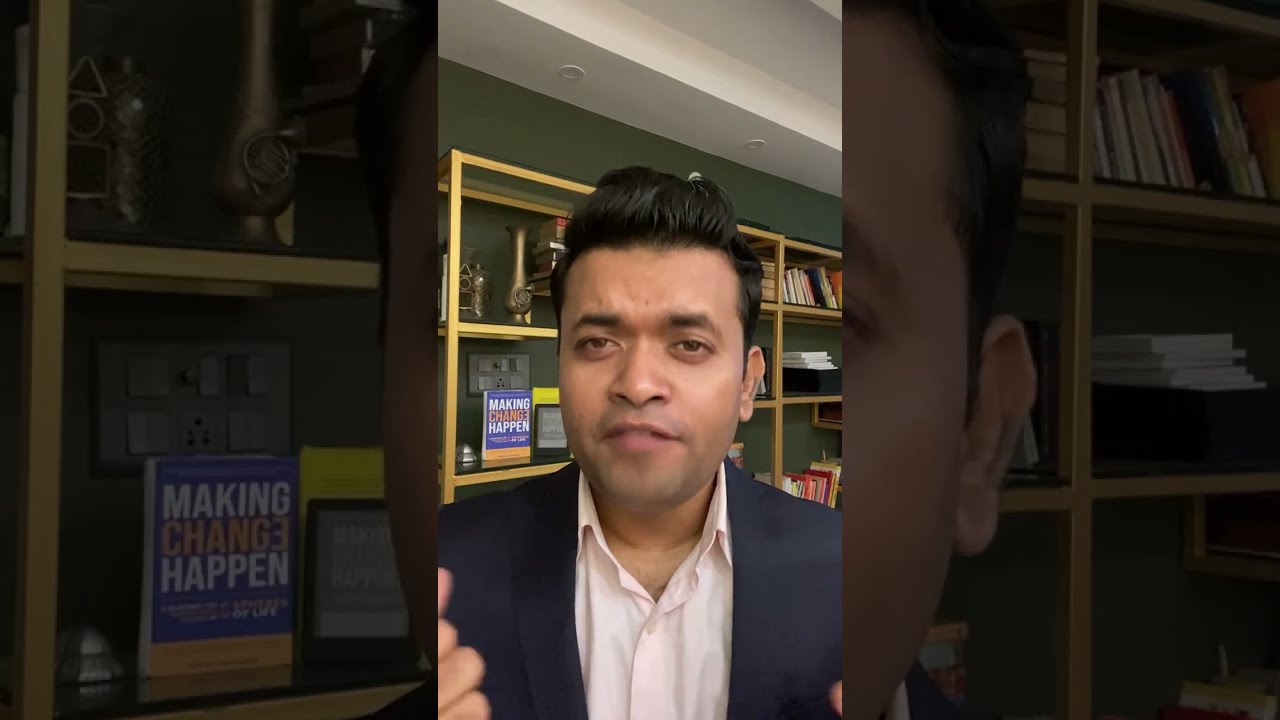
Here’s a thing I had to learn the slow way: most of the ceilings I bumped my head on were not put there by the world. I built them myself, brick by brick, out of sentences I had repeated so often they stopped sounding like opinions and started sounding like facts. I’m not the kind of person who finishes things. People like me don’t get to do that. I’m bad with money. I’m not technical. Nobody handed me those lines. I rehearsed them.
That’s the uncomfortable centre of the video above. Our beliefs don’t sit quietly in the background — they write the script our actions follow. You will not seriously try for something you have already decided is impossible for you. So before we talk tactics, we have to talk about the story you’re running on autopilot.
A belief is just a thought you stopped questioning
The trap with a limiting belief is that it disguises itself as observation. It doesn’t announce itself as a fear; it shows up wearing the costume of realism. “I’m just being honest about myself.” But honesty and old conditioning are not the same thing. A lot of what we call self-knowledge is really self-prophecy — we predict the failure, then quietly arrange our effort so the prediction comes true.
This is why I put so much of Making Change Happen into the Mental sphere. Of the eight spheres of life the book works through — business, finances, relationships, the physical, the mental, the spiritual, family and lifestyle — the mental one is the lever that moves all the others. A money problem is often a belief problem wearing a money costume. A stalled business is sometimes a founder who has quietly decided he isn’t allowed to win.
The challenge is never identifying what needs to change. It’s implementing it — and your beliefs decide whether you even start.
The 4 steps, and the work underneath them
In the video I walk through a four-step way to challenge a negative belief — broadly: catch it, question it, replace it, and act on the new belief. I won’t re-narrate all of it here; watch it above for the full walk-through. What I want to add is the part that doesn’t fit in a few minutes of video: each of those steps is only as good as the evidence you feed it.
Catching the belief means writing the actual sentence down. Not “I have confidence issues” — the specific line your mind plays. Questioning it means treating it like a claim in a courtroom: where’s the proof, and is it really proof or just a memory you’ve over-weighted? Replacing it isn’t slapping a motivational sticker over the wound; it’s building a more accurate belief that you can defend with real instances from your own life. And acting on it is the only step that actually changes anything.
This is where the psychologist Carol Dweck’s work on the growth mindset earns its place — the finding that whether you believe ability is fixed or can be developed measurably changes how you respond to difficulty. A negative belief is almost always a fixed-mindset belief in disguise: this is just how I am. The four steps are, underneath, a way of converting “this is how I am” into “this is how I am, for now.”
Why belief work is effort->effortless work
There’s a line that runs through the whole book: what’s effortless to do is just as effortless to neglect. Challenging a belief is exactly that kind of work. Nobody will ever check whether you did it. There’s no deadline. It costs nothing but a few honest minutes — which is precisely why most people never do it, and why doing it consistently is a quiet superpower.
The first time you challenge a belief, it feels clumsy and fake. The tenth time, faster. By the hundredth, catching a toxic thought and questioning it is automatic — it has crossed from effort into effortless, and now it runs in your favour instead of against you. That’s the whole game: you’re not trying to win an argument with yourself once. You’re retraining the default.
Do this today
Don’t let this stay a nice idea. Pick the one belief that has cost you the most — the one that decides what you don’t even attempt. Write it as a single sentence. Then answer three questions in writing: Is it actually true? What has it cost me? What would I attempt this month if it weren’t true? Then take the smallest possible action that the new belief would take. Today, not Monday.
If you want the trackers and frameworks I use to make this stick rather than fade by the weekend, they’re in the free resources, and the full Mental-sphere chapter — with the stories I’m less proud of — is in the book.
You are not your loudest thought. You’re the one who gets to question it.