Ready to escape the trap of mental stagnation?
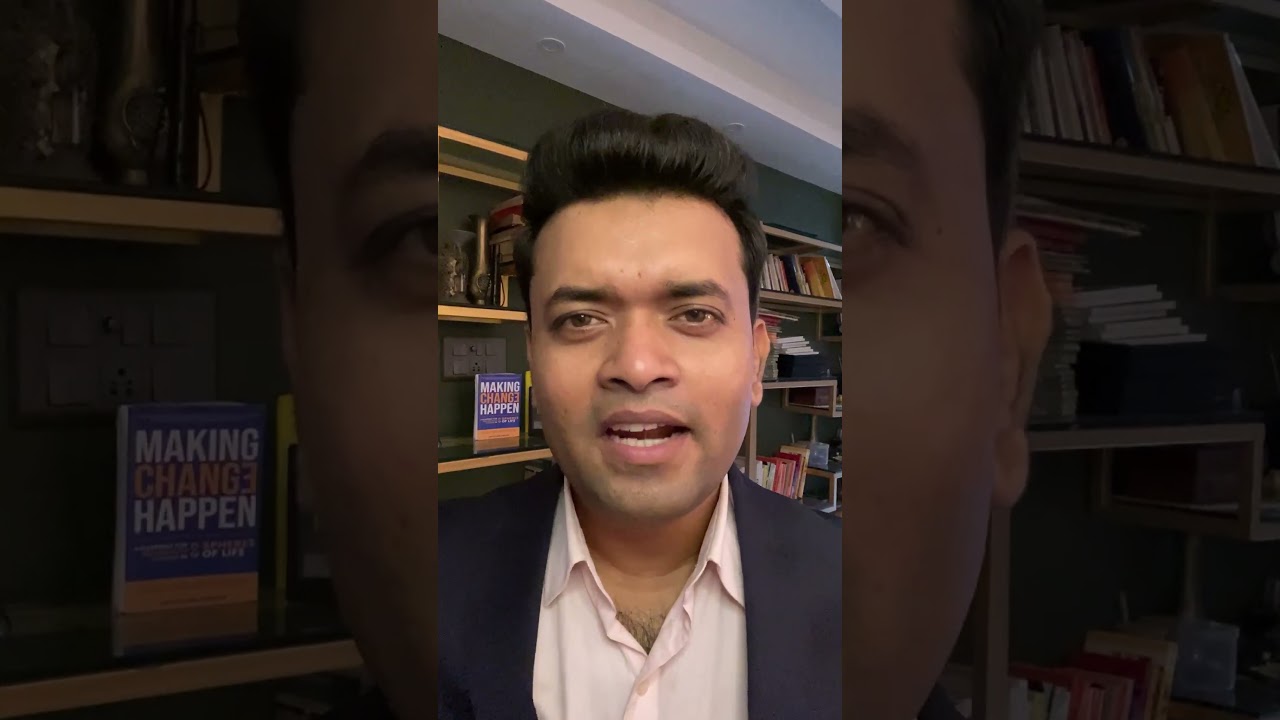
You know the feeling before you can name it. The days start to blur. You’re doing the same drive, the same scroll, the same small loop of tasks — and somewhere underneath it your mind keeps wandering off, looking for an exit it can’t find. Nothing is wrong, exactly. That’s the trap. Stagnation rarely announces itself with a crisis. It arrives quietly, dressed as routine.
In the video above, I talk about that quiet drift — the monotony of everyday life, and the restless mind that comes with it. Here I want to go a layer deeper than the eight minutes allow: what mental stagnation actually is, why it isn’t a character flaw, and the unglamorous moves that get you moving again.
A wandering mind is a signal, not a failure
We tend to treat the wandering mind as the problem. It isn’t. It’s the dashboard light. A mind that keeps drifting is a mind telling you it has stopped being stretched. Boredom, in that sense, is intelligence with nowhere to go.
In Making Change Happen I separate every struggle into what’s happening on the outside and what’s going on on the inside. Stagnation is the cleanest example of the gap between the two. On the outside, life looks fine — stable job, full calendar, nothing broken. On the inside, you feel the slow erosion of caring. The mistake is to fix the outside (a new gadget, a new series, a weekend away) when the signal is coming from the inside.
Change is inevitable, suffering is optional. The monotony isn’t doing this to you. The refusal to change inside it is.
Why the mind stagnates
The mental sphere is one of the eight I write about — and it’s the one that quietly governs the other seven. When it stalls, everything downstream feels heavier: relationships, work, the body, money.
Here’s the uncomfortable root: stagnation is usually a comfort problem disguised as a boredom problem. The mind grows in the narrow band just outside the comfort zone — where there’s enough challenge to demand your attention but not so much that you freeze. Stay too long inside the comfort zone and the band closes. The routines that once protected you start to flatten you. This is why people who seem to “have everything sorted” are often the most quietly stuck. There’s nothing left pressing on them.
The psychologist Carol Dweck named the mechanism well in her work on the growth mindset — the belief that abilities are built, not fixed. A fixed mindset reads monotony as “this is just how things are.” A growth mindset reads the same monotony as “this is a level I’ve outgrown.” Same life. Different verdict. And the verdict you hold quietly decides whether you reach for the next rung or settle.
The trap is effortless — which is exactly the danger
One line I keep returning to: what’s effortless to do is just as effortless to neglect. Stagnation thrives in the effortless. Nobody schedules it. You don’t decide to stop growing — you simply stop choosing the small, slightly harder thing, day after day, until the not-choosing becomes the life.
That’s why the way out isn’t a grand reinvention. The instinct, when we feel trapped, is to plan an enormous escape — quit, move, blow it all up. But the genuine antidote is the opposite of dramatic. It’s deliberately reintroducing effort into a life that has gone too smooth, in doses small enough that you’ll actually repeat them. Effort, repeated, is what eventually becomes effortless mastery — and a mind that’s mastering something has no room to stagnate.
What to actually do this week
After you watch the video, try these — they’re small on purpose:
- Name the loop out loud. Write the exact sentence: “I feel stuck because ____.” Stagnation loses half its power the moment it’s specific instead of a fog.
- Pick one edge. Choose a single thing that is mildly uncomfortable and slightly above your current level — a skill, a conversation you’ve avoided, a book outside your lane. Not ten. One.
- Schedule the friction. Put it in the calendar like a meeting. Don’t leave it to motivation; motivation is the first thing monotony kills. Commitment carries you on the low days when interest won’t.
- Change one input. Swap one passive hour (a scroll, a re-watch) for one active one. The mind doesn’t need a new life. It needs a new demand.
- Reflect weekly, not yearly. Ten honest minutes asking “where did I grow, where did I coast?” does more than any New Year’s resolution.
None of these will feel like much on day one. That’s the point — and the test. The compounding is invisible until suddenly it isn’t.
If you want the trackers and frameworks I use to keep the mental sphere from going flat, the free resources are there for exactly this, and the full book takes each of the eight spheres apart the same way.
You don’t escape the trap by waiting for a better life to arrive. You escape it by making the ordinary one slightly harder, on purpose, starting today.