Failure is not the opposite of success. It is a part of success.
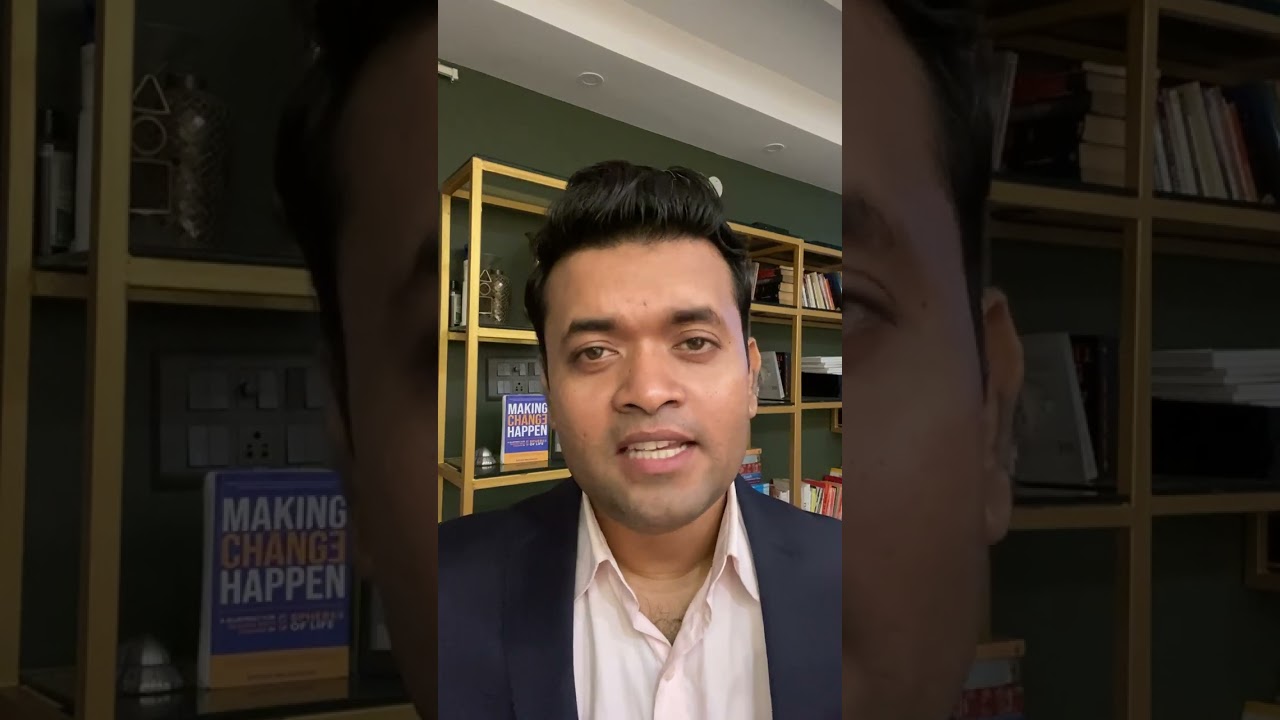
We file failure and success into two opposite drawers. Win goes in one, loss goes in the other, and we spend our lives trying to fill the first while emptying the second. The video above is me arguing that the drawers are a lie. Failure isn’t the opposite of success — it’s an ingredient inside it. You can’t bake the cake without it.
I learned this before I had any language for it. As a kid in small-town Northeast India I earned the nickname chief destruction officer — I took apart everything that worked and occasionally set fire to things that shouldn’t burn. (Ask my grandmother about the bamboo-and-tin house.) Most of what I built collapsed. But every collapse taught me something the intact version never could. That’s not a metaphor I invented later to feel better. It’s just how making anything actually goes.
The opposite of success is not trying
Here’s the reframe that matters: the real opposite of success isn’t failure. It’s never stepping up to the line. A missed shot and a shot you never took look identical on the scoreboard — zero — but they are nothing alike. One is data. The other is silence.
This is why I keep returning to the idea of a growth mindset — Carol Dweck’s distinction between believing your ability is fixed versus believing it’s built. The fixed mindset reads failure as a verdict on who you are. The growth mindset reads the exact same event as feedback on what you tried. Same data, opposite story. And the story you tell yourself after a setback decides whether you ever step up again.
Change is inevitable. Suffering is optional.
The suffering, most of the time, isn’t the failure itself. It’s the story we wrap around it.
Why this isn’t a “business” idea — it’s all eight spheres
In the book, Making Change Happen walks through eight spheres: business, finances, relationships, the physical, the mental, the spiritual, family, and lifestyle. People assume failure is a business topic — a failed launch, a bad quarter. But notice how it shows up everywhere:
- A relationship that ended taught you what you actually need.
- A physical plan you abandoned showed you the routine was built for someone else’s life, not yours.
- A financial bet that went sideways recalibrated your appetite for risk.
- A mental low point you climbed out of became the proof you reach for next time.
The sphere changes. The mechanism doesn’t. Failure is information, arriving in the only language reality speaks fluently: consequences.
The effort-to-effortless spine
One of the threads running through the book is the move from effort to effortless — and failure is the toll you pay on that road. The first time you do anything hard, it costs everything. The hundredth time, it’s nearly free. What happened in between wasn’t luck. It was a stack of small failures, each one shaving a little friction off the next attempt.
This is also the Delta-4 lens: the gap between where you are and the noticeably better version of where you could be. You don’t cross that gap in one heroic leap. You cross it by being willing to be visibly, repeatedly wrong on the way there — and treating each wrong turn as a coordinate, not a condemnation. Thomas Edison’s framing still holds: he didn’t fail to make a lightbulb, he found thousands of ways that didn’t work. The successful filament was made of all of them.
Luck is the macro output of hundreds of micro-actions taken on ordinary days.
A lot of those micro-actions, honestly, are micro-failures.
Something to do this week
Watching the video is the easy part. Here’s the actual practice.
- Pick one failure you’re still wincing about. Recent or old, doesn’t matter.
- Separate the event from the story. Write the bare facts in one line. Then, underneath, write the verdict you attached — the “this means I’m…” sentence. Stare at the gap between them.
- Extract the one thing. Every real failure carries exactly one piece of usable information. Find it. Name it. That sentence is your return on the loss.
- Schedule the next attempt. Not the abstract intention — a date. Failure only becomes a part of success if there’s a next attempt for it to feed.
If you want structure for this, the free resources at /gbr/ include the trackers and reflection tools I actually use, and the full argument — across all eight spheres — lives in the book.
You were never going to get the clean version. Nobody does. The clean version is what we show; the failures are what we’re made of. Stop trying to avoid the ingredient — and start using it.