Don't let your past dictate your future. Choose Growth over Fixed Beliefs
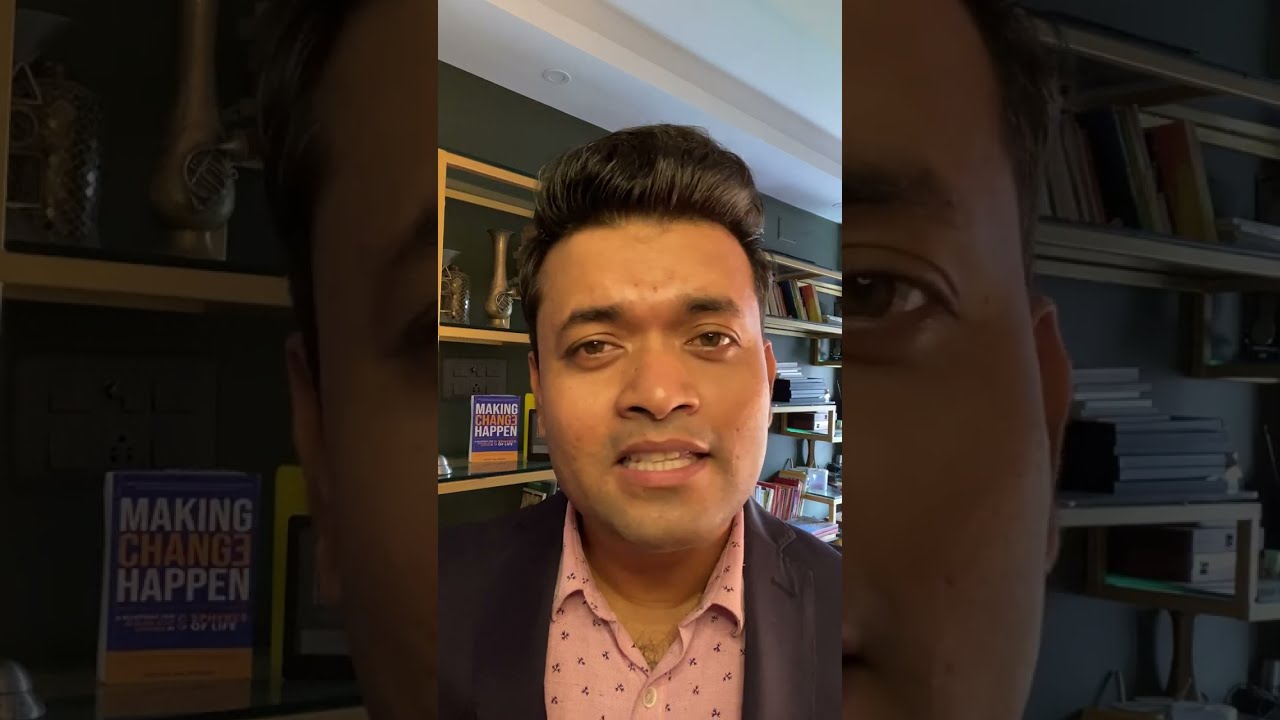
Somewhere around the age of seven, someone handed you a verdict. You’re the smart one. You’re the difficult one. You’re not really a numbers person. You’re shy. Maybe it was a parent, a teacher, a relative who meant well. And because you were small and they were tall, you wrote it down as fact and carried it for thirty years.
Here’s the uncomfortable truth I get into in the video above: most of what we call “who I am” is just feedback we received before we were old enough to argue back.
The story you didn’t choose
I grew up in a small town in the Northeast of India, raised mostly by my grandmother. Like every kid, I collected labels — some kind, some careless. The dangerous ones aren’t the insults. They’re the casual descriptions that quietly become a ceiling: people like us don’t do that, you’ve always been bad at this, that’s just how you are.
The problem isn’t that the feedback was wrong. Sometimes it was accurate for the kid you were at the time. The problem is that you let a snapshot become a sentence. A description of your past became a prediction about your future, and you stopped testing whether it was still true.
Change is inevitable. Suffering is optional. So is the story you tell yourself about who you’re allowed to become.
Fixed beliefs vs. a growth mindset
Psychologist Carol Dweck spent decades studying this, and her framing is the cleanest I’ve found. A fixed mindset treats your abilities as carved in stone — you have a fixed amount of intelligence, talent, or worth, and your whole life becomes an exam to prove you have enough of it. A growth mindset treats those same abilities as things you develop through effort, strategy, and help from others.
The difference isn’t optimism. It’s what you do when you hit a wall. The fixed mindset reads a setback as a verdict — see, I told you I’m no good at this. The growth mindset reads the exact same setback as information — not yet, and here’s what to adjust. Same failure. Two completely different futures.
Your childhood feedback is so powerful precisely because it installs one of these operating systems before you can choose. The good news is that an operating system can be reinstalled. That’s the entire premise of Making Change Happen — the gap is never information, it’s execution. You already know you could be more than your label. The work is in actually rewiring it.
Where this lives in the eight spheres
In the book I split life into eight spheres — business, finances, relationships, the physical, the mental, the spiritual, family, and lifestyle. Fixed beliefs are sneaky because they don’t stay in one box. The “I’m bad with money” label hijacks your finances. “I’m not a confrontation person” quietly governs your relationships. “I’ve always been unfit” runs your physical life. One inherited sentence, fanning out across your whole map.
The two spheres where the rewiring actually happens are the mental (where the old story is stored) and the lifestyle (where the new one gets built, through deliberate daily choices). Beliefs don’t change because you read a better idea. They change because you accumulate evidence against the old one. Every small action that contradicts the label chips away at it.
The effort that buys effortlessness
Here’s the part people skip. A fixed belief is effortless — it requires nothing of you, which is exactly why it’s so easy to keep. Rewriting it sits just outside your comfort zone, and that discomfort is the price of admission. One of the lines I keep coming back to: what’s effortless to do is just as effortless to neglect. The growth mindset isn’t a feeling you summon. It’s a set of small, repeated, slightly uncomfortable reps that eventually make the new identity automatic. Effort, paid daily, until it becomes effortless.
What to do this week
Don’t try to overhaul your whole self-image. Run one experiment.
- Name one label. Write down a single belief about yourself that starts with “I’m just not the kind of person who…” Get specific.
- Trace it. Whose voice is that, really? When did you first decide it was true? You’re not assigning blame — you’re checking the expiry date on old feedback.
- Run a tiny counter-rep. Do one small thing this week that the label says you can’t. Not the whole mountain — one step up it. Then do it again. You’re not trying to feel different; you’re gathering evidence.
The free toolkits at /gbr/ have trackers built for exactly this kind of quiet, repeatable rewiring.
Watch the video above for the heart of it. Then come back here and pick your one label. Your past gets a vote in who you become. It doesn’t get a veto.