Slow Down to move Faster!
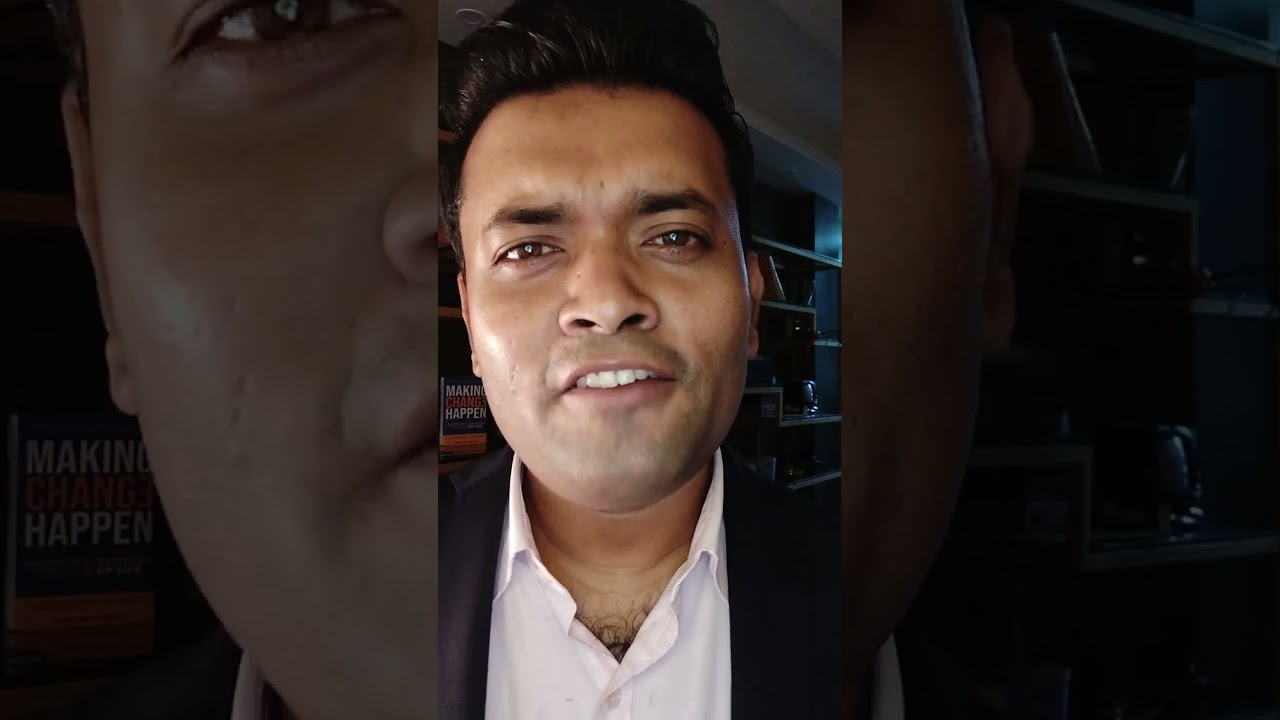
We treat speed as a virtue. Faster launches, faster fixes, faster transformations. But somewhere along the way we confused motion with progress — and the two are not the same thing. You can be very busy and going nowhere. In the video above I make the case that the most reliable way to move faster, in almost any part of life, is counterintuitive: you slow down first.
I learned this the hard way as a first-generation businessperson with no map. Early on I mistook hustle for momentum. I’d sprint at every problem, skip the unglamorous setup, and wonder why the same issues kept circling back. The breakthrough wasn’t a faster sprint. It was a pause long enough to ask the right question before answering the wrong one.
Speed without direction is just expensive motion
When you rush a change, you usually skip the part that does the real work: understanding the root. In Making Change Happen I keep returning to one distinction — what’s happening on the outside (the visible symptom you want gone) versus on the inside (the actual cause). Rushing fixes the outside. Slowing down fixes the inside. And only the inside fix holds.
Think about how often we attack symptoms at speed. The relationship feels distant, so we plan a louder holiday. The body feels heavy, so we crash-diet by Monday. The business stalls, so we add three new initiatives. Fast, visible, satisfying — and usually wrong, because we never sat with the question long enough to find what was really broken.
Going slow on the diagnosis is what lets you go fast on the cure.
The compounding case for slowing down
Here’s the part that makes “slow” worth it: small, deliberate, repeatable actions compound. The book’s whole argument is that luck and transformation are the macro output of hundreds of micro-actions taken on ordinary days. Compounding rewards consistency, not intensity — and consistency is something you can only sustain at a pace you can actually keep.
This is why I’m wary of the dramatic overhaul. We crave the magic: the overnight before-and-after. But what’s effortless to do is just as effortless to neglect, and what’s done in a frenzy is just as easily abandoned. Slowing down isn’t the enemy of ambition. It’s the only way to make ambition survive contact with a low-motivation Tuesday.
There’s good science under this. The research on deliberate practice — Anders Ericsson’s work on expertise — shows that mastery comes not from raw hours but from slow, focused, feedback-rich repetition. And the cost of constant context-switching is real: studies on attention residue (Sophie Leroy’s work) show that jumping fast between tasks leaves a part of your mind stuck on the last one, so “fast” multitasking is often slower than doing one thing properly.
Where this lands across the 8 spheres
Slowing down isn’t a productivity trick reserved for work. It’s a posture you can apply to any of the eight spheres the book covers — business, finances, relationships, physical, mental, spiritual, family, and lifestyle:
- Business: before adding initiatives, slow down to ask which single constraint is actually holding the system back.
- Physical: pick the smallest change you can repeat for a year, not the boldest one you’ll quit in a month.
- Relationships: the fast fix is a grand gesture; the slow fix is showing up consistently when nothing dramatic is happening.
- Lifestyle: design the life on purpose instead of reacting at speed to whatever shouts loudest.
This is also where the effort-to-effortless spine comes in. Anything worthwhile starts as deliberate effort — clumsy, slow, conscious. Repeated patiently, it crosses a threshold and becomes effortless, almost automatic. But you only get the effortless version by being willing to be slow and bad at the start. Skip the slow phase and you never bank the automaticity. That’s the Delta-4 idea in plain terms: a change is only worth the friction if the delta in outcome is large enough to be felt — and you can’t judge that delta honestly while you’re rushing.
What to do this week
Pick one change you’ve been trying to force at speed. Before doing anything, spend ten quiet minutes separating the outside from the inside — what you can see versus what’s actually causing it. Then choose the smallest action you could repeat every day without heroics, and protect it. That’s it. One root, one repeatable action, no sprint.
If you want the frameworks and trackers I use to slow down deliberately, the free resources are there, and the full blueprint lives in the book. Watch the video above, then give yourself permission to go slow on purpose. It’s the fastest thing you’ll do all year.