Dare to step outside your comfort zone!
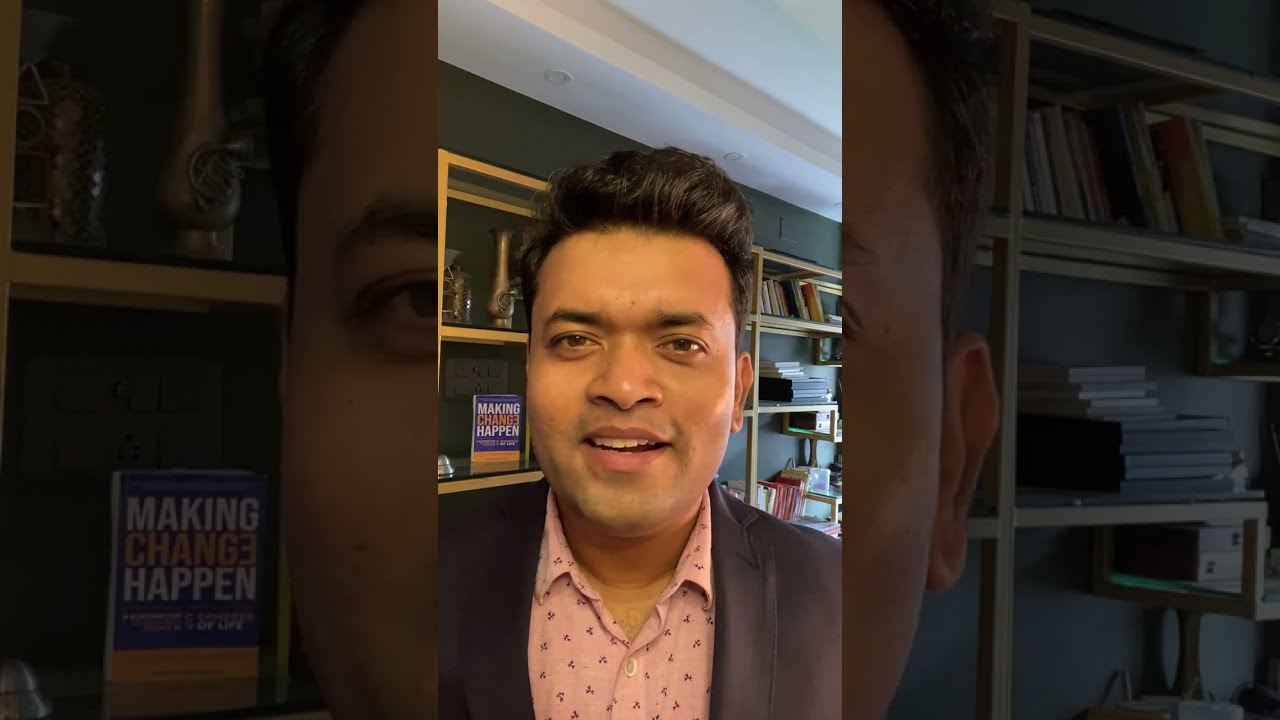
The most dangerous place in your life isn’t the edge. It’s the middle of the couch. The comfort zone doesn’t announce itself as a trap — that’s what makes it one. It feels like rest. It feels earned. And then a year goes by, and you realise the thing that kept you safe also kept you exactly the same.
In the video above I make the case for treating discomfort as a gateway rather than a warning sign. This page is the longer version of that argument — the part I’d say to you over coffee, after the camera’s off.
The comfort zone is a cage that feels like a couch
Here’s the uncomfortable truth at the heart of the book: growth lives just outside the comfort zone, and discomfort is the price of admission. There’s no version where you stay where you are and become who you want to be. The two are mutually exclusive.
We tell ourselves a flattering story about comfort — that it’s the reward for hard work, the place we get to relax. Sometimes it is. But more often it’s the place where ambition quietly goes to die. The comfort zone can liberate you when it’s a base camp you return to between climbs. It limits you the moment it becomes the whole expedition.
Change is inevitable. Suffering is optional. But growth? Growth you have to go out and choose.
The reason this is so hard is the same reason most change is hard: the gap is never information, it’s execution. You already know you should make the call, send the pitch, have the conversation, sign up for the thing. Knowing isn’t the bottleneck. Crossing the line between knowing and doing — that’s the bottleneck. And that line is made entirely of discomfort.
Why “just do it” doesn’t work for long
Motivation is a terrible foundation, because motivation is a feeling, and feelings don’t show up on the days you need them most. This is where I lean hard on a distinction that runs through the whole book: commitment over interest. Interest is fleeting — it gets you to the gym in January. Commitment is what carries you on the low-motivation Tuesday in March when nobody’s watching and nothing feels exciting.
There’s a trap on the other side, too. Once something does get comfortable, it gets easy to drop. As I put it in the book: what’s effortless to do is just as effortless to neglect. The push outside your comfort zone isn’t a one-time leap. It’s a standing decision you re-make, deliberately, because the easy thing and the right thing rarely line up on their own.
That’s the whole effort-to-effortless arc. You pay effort up front — awkward, clumsy, uncertain — and over time the new behaviour becomes second nature. But “effortless” is the danger word, not the finish line. The day it gets easy is the day you have to watch you don’t quietly slide back to the couch.
It’s not one comfort zone. It’s eight.
Most people think of the comfort zone as one thing — usually career or fitness. But you have a comfort zone in every sphere of your life, and they hide in different costumes. The book breaks life into eight: business, finances, relationships, the physical, the mental, the spiritual, family, and lifestyle. Your comfort zone in relationships might be avoiding the hard conversation. In finances, it’s never looking at the actual number. In the physical, it’s the snooze button. In business, it’s the strategy that worked three years ago and quietly stopped working.
The point isn’t to blow up all eight at once — that’s just a different way of staying stuck, through overwhelm. The point is to find the one sphere where the gap between where you are and where you want to be is widest, and step one inch past the edge there. Discomfort is a signal of direction, not a stop sign.
Something to actually do this week
Pick one sphere. Just one. Then run it through the two-sided lens the book uses on every challenge:
- On the outside — what would change that other people could see? The email sent, the weight on the bar, the conversation had.
- On the inside — what’s the real resistance? Fear of looking foolish, of failing publicly, of finding out the answer. Name it. Resistance you can name loses most of its grip.
Then choose the smallest action that makes you slightly uncomfortable — not heroic, just uncomfortable — and do it before this week is out. Small daily choices compound. That’s not a slogan; it’s the entire mechanism. The Burj Khalifa is a spectacle, but it’s standing on a decade of unglamorous foundations. So is anyone you admire.
If you want the trackers and frameworks I use to keep this honest — the ones that turn a good intention on a Tuesday into a standing commitment — they’re free at /gbr/, and the full blueprint across all eight spheres is in the book.
The edge of your comfort zone is the only place anything interesting has ever happened to you. It’s still there. Go stand on it.